The revolution of electric vehicles (EVs) in India is rapid. As the quantity of EVs on the roads is increasing each day, we are becoming closer to cleaner transportation and reduced emissions. However, there is one question that may slip up on anyone: what happens when such EV batteries come to ‘end of life’?The response will not be as you think. Such batteries do not need to be disposed of. In fact, they can live on, powering something even bigger — India’s energy grid and rural electrification. This approach is known as battery repurposing, and it’s one of the smartest ways to turn clean mobility into clean energy.
The Second Life of EV Batteries
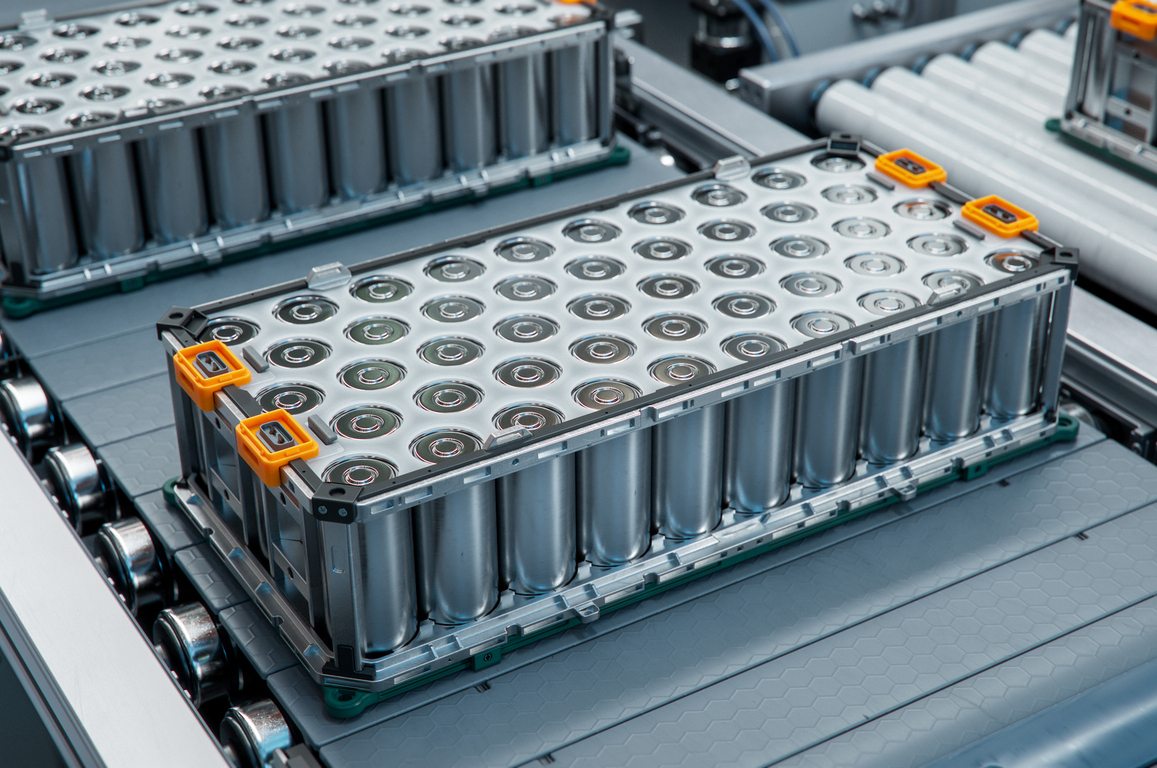
Every EV battery has a life cycle. After several years of use, it slowly loses its ability to power vehicles efficiently. But even when it drops to around 70–80% of its original capacity, it still has plenty of life left for other applications.
Instead of recycling it right away, we can repurpose it — meaning, we take these used batteries, test and refurbish them, and deploy them for stationary energy storage.
Think of it like this — a retired EV battery might struggle to push a car forward, but can easily store solar power or back up a rural microgrid.
Why Repurposing Makes Sense for India
The energy situation in India is changing. Although solar and wind energy are increasing at a high rate, they do not produce electricity at all times. That is why energy storage is becoming essential- so that the lights need to be ON even when the sun is not shining or the wind is not blowing.
A recycled EV battery will be one way to stabilize this oscillation. During the day time, they store surplus energy. They reintroduce it into the grid during night times. This enhances the reliability of the renewable energy, particularly in remote and rural regions where power outage becomes a common occurrence.
This solution presents energy security and sustainability to a country as large and varied as India. It reclaims used batteries from ending up in landfills, and it also minimizes the consumption of new resources due to the creation of new storage systems.
A Boost for Rural Electrification
In India, there are still millions of people living in places where there is no reliable power supply or power supply at all. This is because it is a time-consuming and expensive procedure to extend the grid to all corners. That is modifiable with battery-based solutions, which are decentralised.
Imagine a village powered by solar panels that capture sunlight during the day. Batteries of the EVs are recycled to save that energy that can be spent to illuminate at night or operate water pumps, or charge small devices. It is cheap, local, and clean.
This is how repurposing turns old technology into a new opportunity. It doesn’t just bring power, it brings possibility. Children can study after sunset, farmers can irrigate efficiently, and local businesses can run longer hours.
Environmental and Economic Wins
The use of EV batteries to create a new product is an ideal fit for the Indian vision of a circular economy. Instead of disposing of used batteries as waste, we consider the used batteries as an asset that can be reused to live a second meaningful life.
From an environmental perspective, it’s a double win, reducing e-waste while cutting the carbon footprint of manufacturing new batteries.
And there’s an economic upside too. Refurbished batteries are cheaper when compared to new storage devices, and this makes the development of energy projects cheaper for developers and communities. With time, with better technology and testing procedures, these second-life systems might constitute a significant portion of the clean energy mix in India.
Safety and Performance Matter
Of course, safety comes first. All the used EV batteries cannot be reused. This is where innovation comes in. Innovative diagnostics based on Artificial Intelligence (AI) and machine learning can be used to evaluate the health of each cell and determine how it will perform.
This is because very few reliable batteries can pass through the screening and refurbishment process to end up in second-life projects. This guarantees safety and efficiency.
Business organisations operating in this field, such as those at the forefront of recycling and repurposing businesses in India, are coming up with strong testing systems and compliance measures that will match the national safety measures.
It is the remedy that sustainability is not only about thinking, but also about acting responsibly.
Building Partnerships That Last
Cooperation is vital to scale battery repurposing. The automakers, recyclers, energy developers, and regulators should collaborate.
OEMs provide current partners with end-of-life batteries, and policymakers develop clear guidelines on the reuse of these batteries; then the ecosystem is more robust. The result? A steady supply of second-life batteries and a trusted framework for their deployment.
At MiniMines, we think that such an action by groups is what will help India achieve the full potential of clean-tech transition. Interestingly, when we come together, we can create a value chain wherein nothing is wasted, where each battery, each innovation, and each partnership has its role to play in creating a cleaner future.
The Road Ahead
Repurposing EV batteries is not just a matter of ensuring they last longer; it is also a matter of lasting longer. It is determined by filling the gap between clean energy and clean mobility.
In the case of India, it may become the missing link in providing all people access to energy, as well as decreasing the pressure on natural resources. It is a move towards the most circular and sustainable energy infrastructure, which is driven by innovation, partnership, and intent.
When you are on this trip, be it designing vehicles, working on renewables, or developing a policy, it is time to consider how second-life batteries can be integrated into your vision. We should use these batteries for a new end, and make India, village after village, grid after grid, life after life, light.