Every August, India talks about self-reliance. Flags go up. Speeches get made. And somewhere in a warehouse, a pile of dead scooter batteries sits waiting, holding more of that story than most people realise. Think about it. The lithium, cobalt and nickel packed inside those cells came from mines thousands of miles away. India imports nearly all of it. So every spent pack you throw out isn’t just waste. It’s a small pile of critical minerals you already paid for once, now begging to be used again.
That’s the quiet case for lithium ion battery recycling. It isn’t only an environmental story. It’s an economic one, and a national one.
Why the pile keeps growing
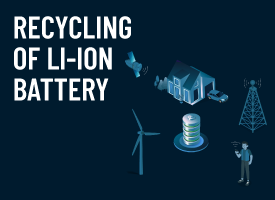
India’s roads are filling up with electric two-wheelers, three-wheelers and delivery fleets. Every one of them carries a battery with a working life of roughly five to eight years. The first big wave of EVs is now ageing out. And behind them sit telecom towers, solar storage banks and countless gadgets, all running on the same chemistry. So the volume of tired cells is climbing fast. Left alone, that becomes a hazard. Done right, it becomes a resource. The gap between those two outcomes is where a serious li battery recycling company earns its place.
What good recycling actually recovers
Here’s the part that surprises people. A dead battery is rich. Really rich. Skilled battery-grade material recovery pulls out lithium, cobalt, nickel and manganese at a purity high enough to build brand new cells. Not downgraded scrap. Cell-grade metal, ready to go back into the supply chain. MiniMines built its whole approach around this idea. Our Hybrid Hydrometallurgy process recovers more than 96% of these key metals while using less water and energy than older smelting routes. So the loop closes tighter, and it stays clean. Old methods burned material at high heat and lost a lot along the way. Hybrid Hydrometallurgy takes a gentler chemical path. Less emission. More metal. That difference matters when you are trying to prove that sustainable battery recycling can pay for itself.
The circular economy, made real
People love the phrase circular economy India. Fewer people can point to where it actually happens. Battery recycling is one of the clearest examples going. A courier company runs its scooters until the packs fade. Those packs come in. Metals come out. Those metals feed a new battery, which powers a new scooter, which runs for the same courier company. The circle isn’t a slide in a deck. It’s a supply chain you can touch. And there’s a middle step many overlook. Not every retired pack is finished. Plenty of second-life batteries still hold enough charge for gentler duty, like backup power or solar storage, before they ever reach the recycler. So the value gets squeezed out twice, which is exactly what a circular system should do.
EPR: the rule that changed the game
None of this stays voluntary for long. India’s Battery Waste Management Rules put the responsibility for end-of-life batteries squarely on the producers who sell them. So EPR compliance for batteries has moved from a nice-to-have to a legal must. Here’s the honest bit. For a lot of OEMs and fleet operators, this feels like a headache. Paperwork. Targets. Certificates. But partner with the right clean tech company and that burden flips into an advantage. You meet your obligations, you get clean documentation, and you keep spent packs out of the grey market where unsafe Li-ion battery disposal causes fires and pollution. Good battery waste management isn’t just about avoiding fines. It’s about proving to your customers, your board and your regulator that you handle your products responsibly from cradle to grave.
Why this is bigger than one company
Scale this up and the picture shifts. Strong EV battery recycling India infrastructure means the country leans less on imported minerals every single year. Each tonne recovered at home is a tonne you don’t buy from abroad. That’s real self-reliance, built from waste most people ignore. It also builds jobs, cleans up informal scrapyards, and gives investors a green story with hard numbers behind it. So the flags in August start to mean a little more when the metal under them is homegrown, even the second time around.
Where MiniMines fits
We are India’s leading name in lithium ion battery recycling, and we treat every incoming pack as raw material rather than rubbish. Our job is to make the responsible choice the easy one for you.
Ready to close the loop on your spent batteries? Whether you run an EV fleet, manufacture cells, or need help meeting your EPR compliance for batteries targets, MiniMines can turn your battery waste into recovered value and a cleaner record. Talk to our team about a collection and recovery plan built around your volumes. Let’s make your self-reliance story a real one.